20 Excellent Ways For Deciding On Best copyright Prediction Site
Top 10 Tips To Choose The Right Ai Platform To Trade Ai Stocks, From Penny To copyright The choice of the ideal AI platform for stock trading, whether in penny stocks or copyright is essential to achieve success. Here are ten tips that will help in your decision. 1. Set Your Trading Goals Tips: Determine your primary focus –penny stocks or copyright-based, or both, and define whether you’re looking for longer-term investment options, short-term trading, or algo-based automation. The reason: Different platforms excel at specific things Being clear about your goals will help you select the best one for your requirements. 2. Assessment of Predictive Accuracy See the accuracy of the platform at predicting events. Verify the reliability of the service through customer reviews, backtests that have been published or results from demo trading. 3. Real-Time Data Integration Tips: Make sure the platform has live market data feeds in real time, especially for fast-moving assets such as penny stocks and copyright. Delayd data can cause missed opportunities and inadequate execution of trades. 4. Assess the possibility of customizing Tips: Choose platforms that allow you to modify parameters, indicators and strategies to suit your style of trading. For example, platforms like QuantConnect and Alpaca offer a variety of options for customization to tech-savvy users. 5. Accent on Features for Automation Tip: Choose AI platforms with powerful automated capabilities, which include stop loss, take profit and trailing-stop features. Automation can help you save time and help you execute your trades more precisely particularly in unstable markets. 6. Use tools to analyze sentiment analysis Tip: Opt for platforms that use AI-driven sentiment analysis, particularly for copyright and penny stocks, which are frequently influenced by social media as well as news. What is the reason? Market sentiment may be the main driver behind the short-term price fluctuations. 7. Prioritize user-friendliness TIP: Ensure that the platform is user-friendly interface and clear documentation. Why: A steep learning curve can hinder the ability of trading. 8. Examine for compliance with regulations. Tip: See if the platform adheres to the rules of trading in your region. copyright Features: Look into features that support KYC/AML. For penny Stocks Be sure to adhere to SEC or equivalent guidelines. 9. Assess Cost Structure Tip: Understand the platform’s pricing–subscription fees, commissions, or hidden costs. Why: A platform that is expensive could reduce profits, especially for smaller trades in the penny stock market and copyright. 10. Test via Demo Accounts Try the platform out with an account with a demo. The reason: A test session can show whether the platform meets your expectations for capabilities and performance. Check Customer Support & Community Tips: Choose platforms that have active communities and strong support. The reason: The reliable advice of other people and the support of your peers can help to resolve problems and refine strategy. Find the platform that best suits your trading style by looking at platforms based on these guidelines. Follow the best ai stock price prediction for website advice including ai trading platform, incite, using ai to trade stocks, best ai for stock trading, ai stock picker, best ai for stock trading, ai stock price prediction, ai stock prediction, smart stocks ai, ai stock prediction and more.
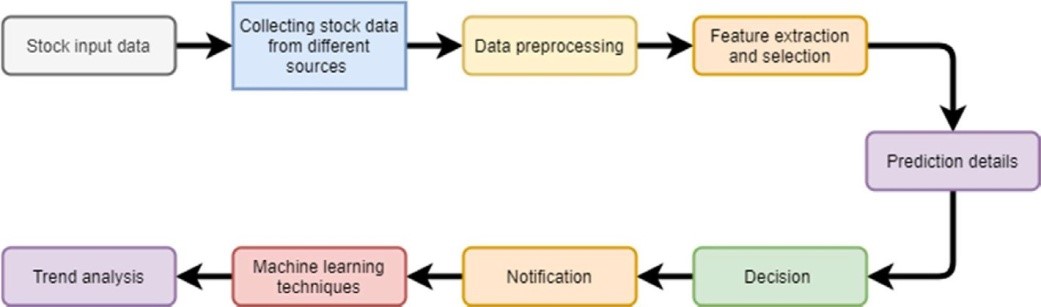
Top 10 Tips For Understanding The Ai Algorithms For Stock Pickers, Predictions And Investment Knowing the AI algorithms used to choose stocks is essential for assessing their performance and aligning them with your goals for investing, whether you trade the penny stock market, copyright or traditional equity. The following 10 tips will help you better understand how AI algorithms are used to predict and invest in stocks. 1. Machine Learning: Basics Explained Tip: Learn about the most fundamental ideas in machine learning (ML) which includes supervised and unsupervised learning and reinforcement learning. These are all commonly employed in stock prediction. What are they: These basic methods are utilized by the majority of AI stockpickers to study historical information and to make predictions. Understanding these concepts is essential to understanding how AI process data. 2. Get familiar with the standard algorithm used to select stocks. It is possible to determine the machine learning algorithms that are the most popular in stock selection by researching: Linear Regression (Linear Regression): A method for predicting price trends by using historical data. Random Forest: Using multiple decision trees for better predictive accuracy. Support Vector Machines SVM: The classification of shares into “buy”, “sell” or “neutral” in accordance with their specific characteristics. Neural networks: Deep learning models are utilized to identify intricate patterns in market data. Understanding the algorithms that are being used will help to comprehend the kind of predictions AI can make. 3. Explore Features Selection and Engineering Tip: Check out the way in which the AI platform chooses (and analyzes) features (data for prediction) like technical indicators (e.g. RSI, MACD) financial ratios or market sentiment. What is the reason: AI performance is heavily affected by the quality of features and their importance. The AI’s capacity to understand patterns and make profit-making predictions is determined by the quality of features. 4. Look for Sentiment Analytic Capabilities Tips: Find out if the AI uses natural language processing (NLP) and sentiment analysis to study unstructured data such as news articles, tweets or posts on social media. Why: Sentiment analytics helps AI stockpickers gauge markets and sentiment, especially in volatile market like penny stocks, cryptocurrencies and other where changes in news or sentiment can have a profound impact on prices. 5. Understand the Role of Backtesting To refine predictions, ensure that the AI model has been thoroughly tested with data from the past. Why: Backtesting helps evaluate how the AI could have performed under the past under market conditions. It aids in determining the algorithm’s robustness. 6. Risk Management Algorithms: Evaluation Tips. Be aware of the AI’s built-in features to manage risk, such stop-loss orders and position sizing. The reason: Properly managing risk avoids huge losses. This is crucial, particularly in volatile markets like copyright and penny shares. To achieve a balanced approach to trading, it’s vital to utilize algorithms created for risk mitigation. 7. Investigate Model Interpretability Tip : Look for AI that offers transparency on how the predictions are created. Why: The ability to interpret AI models allow you to learn more about the factors that influenced the AI’s recommendations. 8. Study the Effects of Reinforcement Learning TIP: Find out about reinforcement learning (RL) A branch of machine learning, where the algorithm learns through trial and error, while also adjusting strategies based on rewards and penalties. What is the reason? RL has been used to develop markets which change constantly and are dynamic, such as copyright. It can optimize and adjust trading strategies based on feedback and increase long-term profits. 9. Consider Ensemble Learning Approaches Tip Why: By combining the strengths and weaknesses of various algorithms to reduce the chances of errors the ensemble model can improve the accuracy of predictions. 10. The difference between real-time and Historical Data History Data Use Tips. Check if your AI model is relying on actual-time data or historical data to determine its predictions. AI stockpickers typically employ a mix of both. Why: Realtime data is critical for active trading strategies in volatile markets, like copyright. Historical data can be used to predict patterns and price movements over the long term. It’s usually best to mix both methods. Bonus: Be aware of Algorithmic Bias and Overfitting Tips – Be aware of any potential biases that AI models may have and be cautious about overfitting. Overfitting happens when a AI model is tuned to old data but fails to generalize it to new market conditions. The reason: bias and overfitting could result in incorrect predictions in the event that AI applies to market data that is real-time. It is essential for long-term performance that the model be well-regularized, and generalized. Knowing the AI algorithms used to pick stocks will help you evaluate their strengths and weaknesses as well as the appropriateness for different trading strategies, regardless of whether they’re focused on penny stocks, cryptocurrencies or other asset classes. This knowledge allows you to make better choices in deciding the AI platform that is best suitable for your strategy for investing. Follow the top rated ai trading bot for website info including ai stock trading app, trading with ai, ai investing platform, stock trading ai, ai in stock market, trading with ai, ai stock picker, trading with ai, ai stocks to invest in, smart stocks ai and more.